
Friday December 12th, 2025
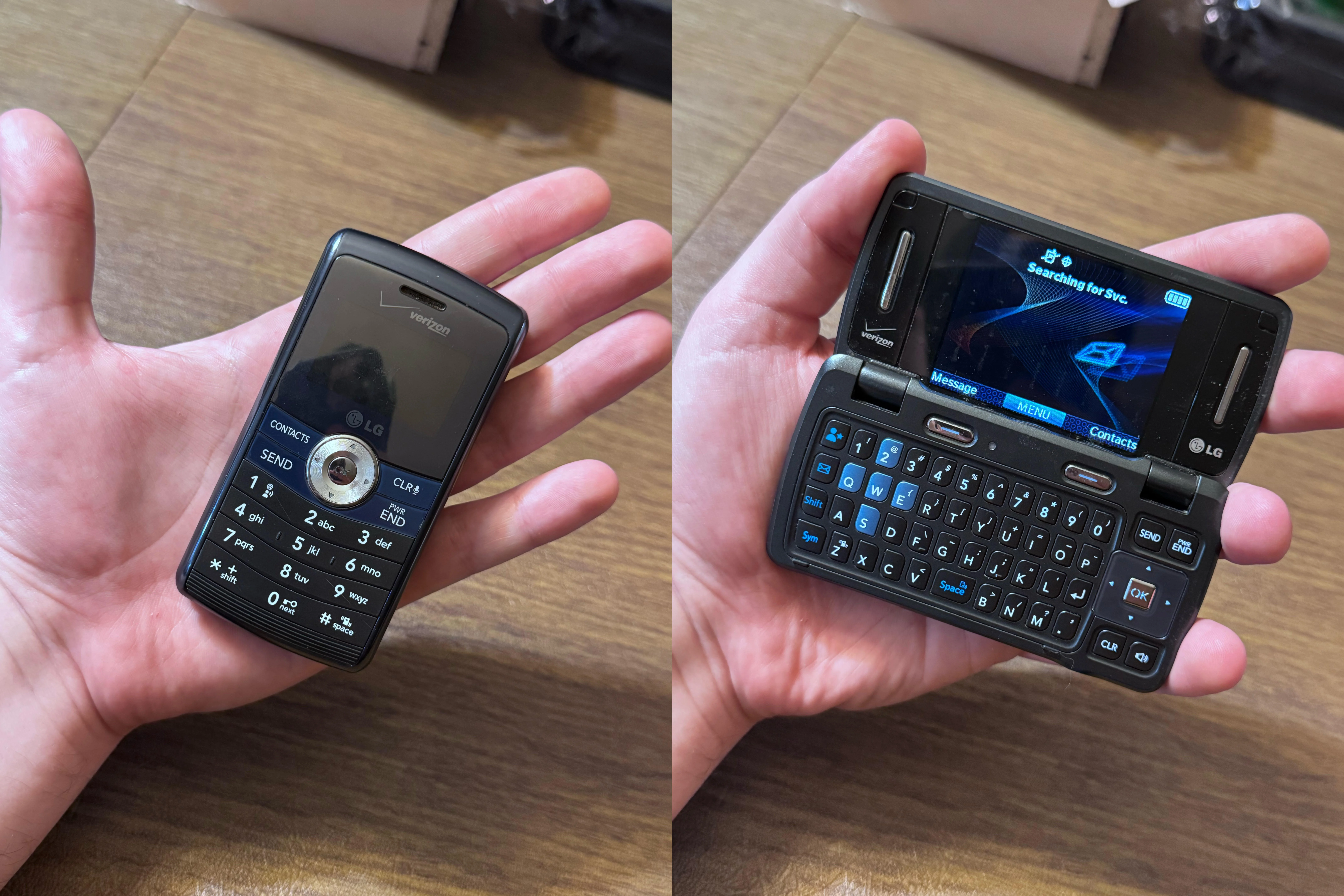
In middle school my parents bought me the LG enV3 – A small, practical, almost smartphone. I could call my parents, text my friends and listen to downloaded music. Fifteen years ago, this was the kind of phone most kids used. No touchscreen, no apps, and definitely no unrestricted access to the internet like we have today. The almost smartphone served its users with just enough technology and connectivity that it amplified life without hijacking it. Reminiscing on this experience of an almost smartphone, makes me wary of parents who are now giving iPhones (or similar smartphones) to children who can’t even hold it in their tiny hands.

These almost smartphones were amazingly useful technologies that are now lost in relics of time. Over the last 15 years, technology has advanced so rapidly that, paradoxically, the almost smartphone no longer exists. Meaning, the cost of making an almost smartphone, became a victim of progress. Think about the standard features in cars today, decades ago, you could save a lot by buying a car without air conditioning. Today, the cost for a manufacturer to include this feature is so minimal that a car without it is almost extinct. The 'almost smartphone' suffered the same fate. Progress didn't just create a better device; it made the full-featured smartphone so inexpensive that the middle option became economically illogical. It was a product trapped in the middle: not cheap enough to be a simple dumb phone and no longer powerful enough to justify its existence next to its low-cost, full-featured successor, the smartphone.
The LG enV3 was a victim of progress, but it raises an interesting question: are we also becoming victims to technological progress? Just as the "almost smartphone" was optimized out of the marketplace for being economically inefficient, the "middle ground" of our inner lives (boredom, quiet reflection, and simply existing) are being optimized away for being inefficient in the new attention centered economy. The goal is no longer to simply capture market share, but to capture our attention; every moment of attention inefficiency (boredom) to be filled with mind stunting stimulation. Children, unbeknown to their parents, are at the forefront of this shift. In the modern classroom, convenience is king: iPads replace the tactile weight of books, instant digital feedback replaces the anticipation of report cards, and group chats replace the messy effort of real world coordination. These tools make life easier for students, but they also optimize away the moments of effort that define a childhood.
The social conditioning to surrender to these technologies feels intentionally designed. “Family Plans” offer aggressive incentives, schools increasingly promote digital integration, and peer groups make anything less than a smartphone a social liability. Parents are effectively cornered by Big Tech and service providers, left to choose between an archaic flip phone or a pocket-sized supercomputer. Intuitively we also have this gut feeling that as technology gets better, that somehow, for some magical reason, our life just gets better. Features like ‘airdrop’ on iPhones, really does convince us of this magic. But this effortless convenience is a clever sleight of hand. It keeps us so mesmerized by the "magic trick" that we don't notice what we’re losing. We're losing something … right?
Biologically, we are wired to seek efficiency (conserving energy), not constant convenience, which often strips away the value of effort. Modern technologies flip the script, making convenience feel like efficiency through addictive design, psychologically blurring the line between the two. Think about endlessly scrolling an online curated feed. It feels efficient, as if we’re staying informed about everything we care about (and don’t care about). Our ancient brains interpret these smooth, immediate rewards, the feeds that actually pique our interests, as efficiency, even though the activity requires little to no active engagement, allowing convenience to masquerade as efficiency. You no longer have to go out and find what you are looking for, you just have to scroll till it comes to you.
Today, most popular smartphone apps are built by teams of engineers and designers applying the same principles of behavioral psychology used to design casinos. We’re not simply adapting to technology anymore; we’re being conditioned to act in ways that benefit it, trading the unquantifiable value of boredom and our time for the predictable stimulation of an algorithmic feed. It's absolutely no accident that many wake up, pick up their smartphones and immediately start scrolling. When every moment of boredom or discomfort is instantly filled by the glow of a screen, a fundamental part of the human experience is eroded. Many adults still remember a time before this pull, before attention was so effortlessly captured.
The deeper worry is for children who have never known that 'before.' Because we lived through the era of the almost smartphone, we have the perspective to know what is missing. We have the benchmark of a life where technology was a tool, not a device consuming our lives. Children today are growing up in a culture without the foundational discomfort of boredom: that crucial, unstructured mental space where the mind learns to create, problem solve, and simply know itself. The risk isn’t just that they will feel a sense of loss; it’s that, unlike us, they will never know there was anything to lose in the first place.